
Roomba Brushes Not Spinning? 5 Easy Fixes to Restore Suction
Roomba brushes stopped turning? Don’t buy a new robot yet. Learn how to fix seized bearings, clogged drives, and jammed side brushes with this expert DIY guide.
Roomba repair typically involves diagnosing issues related to power, navigation, cleaning performance, or mechanical movement. In most repairs, the symptoms appear as charging failures, error messages, incomplete coverage, or unusual noise during operation. A common pattern we see is that these problems develop gradually rather than suddenly, often starting with reduced runtime, inconsistent movement, or missed areas before the unit stops working reliably.
Over time, wear and environment play a significant role. Brushes and wheel modules wear from constant contact with floors and debris, batteries lose capacity after repeated charge cycles, and sensors become unreliable when exposed to dust, pet hair, or moisture. Repeated impacts with furniture can also stress internal mounts and connectors, leading to intermittent faults that are harder to trace.
Difficulty varies depending on the issue. Routine cleaning, battery replacement, and wheel or brush service are generally low to moderate difficulty with high success rates. More involved repairs, such as sensor faults or charging circuit issues, require careful inspection and testing but are still commonly repairable when approached methodically. In most cases, the control board is not the root cause, even when errors suggest electronic failure.
Always confirm the failure before replacing parts. Many Roomba issues are resolved by cleaning, reseating connectors, or correcting alignment problems. Diagnosis-first repair reduces cost, prevents unnecessary part swaps, and improves long-term reliability.
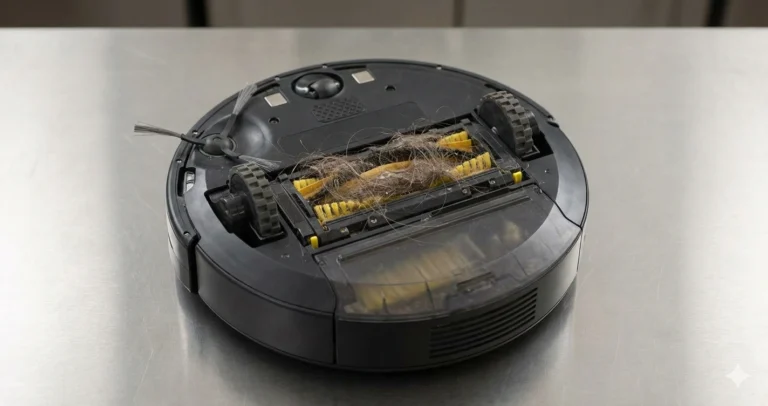
Roomba brushes stopped turning? Don’t buy a new robot yet. Learn how to fix seized bearings, clogged drives, and jammed side brushes with this expert DIY guide.
Is your Roomba refusing to charge? Follow our expert guide to troubleshoot battery, dock, and contact issues to get your robot vacuum back to work.